“An ounce of prevention is worth a pound of cure.” In children’s dentistry, that idea still holds true. A small step taken early can help spare a child pain, missed school, and more involved treatment later.
Many parents have seen a child brush well, smile brightly, and still get a cavity in a back tooth. That can feel frustrating, but it is common. The grooves in molars are deep, narrow, and often hard to clean fully.
In simple terms, dental sealants for kids are a thin protective coating placed over those vulnerable chewing surfaces. They do not replace brushing, flossing, or routine check-ups. They add protection in spots where toothbrush bristles often cannot reach well. Learn how sealants protect teeth from decay.
There is something reassuring about this kind of care. A child’s mouth is always growing and changing, and prevention works best when it supports that growth instead of waiting for damage to appear. In that sense, sealants & restorations are one of the most practical tools in pediatric dentistry.
At My Teeth & Me in New York, NY, our restorative treatments and sealants service provides the kind of gentle preventive care many families seek.
Molars and premolars have pits and fissures, which are tiny grooves and narrow valleys on the chewing surface of the tooth. These areas can trap food and plaque, a sticky film of bacteria. Even careful brushing may miss parts of these grooves.
Children are especially prone to decay in these teeth soon after they come in. Newly erupted permanent molars can sit slightly lower than nearby teeth at first, which makes them harder to clean. That early window matters because cavities can start before a family realizes the tooth is at risk.
A sealant is a thin coating, usually made from a dental resin, that flows into those grooves and hardens. Once bonded to the tooth, it creates a smoother surface that is easier to keep clean. The goal is simple: reduce the chance that bacteria and sugars stay trapped long enough to cause decay. For a broader look at prevention, see how families can avoid tooth decay.
Protecting a healthy tooth before it is damaged is often the gentlest approach. When a tooth can be preserved without drilling or repair, that is usually the better path.
Sealants are preventive, not restorative. That means they are placed to help stop cavities from forming, not to treat a tooth that already has clear decay and needs a filling.
The coating covers the chewing surface grooves of the tooth. It does not cover the whole tooth, and it does not affect how the tooth grows. Its main job is to block bacteria, food particles, and acids from settling into the deepest pits.
In many cases, sealants can lower cavity risk in permanent molars during the years when children are most vulnerable to decay. They can be especially helpful for kids with deep grooves, a history of cavities, inconsistent brushing, orthodontic appliances, or frequent sugary snacks and drinks.
Sealants are not perfect, and they do not last forever. They can wear down, chip, or partly detach over time. That is why a dentist checks them at regular visits and repairs or replaces them when needed.
Most children are considered for sealants when the first permanent molars come in, often around ages 6 to 7. The second permanent molars usually follow around ages 11 to 13. These are the teeth most often sealed because they do much of the chewing and can be the hardest to keep clean.
Some baby teeth may also be candidates in certain cases. This is less common, but a dentist may recommend sealants on primary molars if those teeth have very deep grooves and are expected to stay in place for several more years. Learn more about sealants for baby teeth.
The best timing is usually soon after the tooth has erupted enough to keep the area dry during placement. Dryness matters because the material bonds best to a clean, moisture-free surface. If a tooth is only partly erupted, the dentist may wait and monitor it.
A child does not need to fit a perfect age range to benefit. The decision depends more on tooth shape, cavity risk, and whether the tooth can be sealed properly at that visit.
The sealant process is usually quick and painless. In most cases, no drilling and no numbing injection are needed. That makes it one of the easier preventive visits for many children.
The tooth is first cleaned and dried during a professional cleaning. Then the dentist or hygienist places a gentle conditioning solution on the enamel, which is the hard outer layer of the tooth. This helps the sealant bond securely.
After the tooth is rinsed and dried again, the liquid sealant is painted into the grooves. A curing light is often used to harden the material. Once set, the sealant becomes a thin protective layer over the chewing surface.
Children can usually eat normally soon after the visit unless the dental team gives different instructions. Many families are surprised by how simple the appointment feels.
For most children, sealants are considered a safe and well-established preventive treatment. They have been used in dentistry for decades and are supported by major dental organizations because of their role in reducing decay risk.
Some parents ask about the materials used. That is a fair question. Different products exist, and a dentist can explain what material is used in the office, why it is chosen, and whether there are any special considerations for a child’s health history.
Good preventive care includes clear answers. If a parent has concerns about ingredients, allergies, durability, or whether a tooth is the right candidate, those questions should be discussed before placement.
In general, the larger concern is untreated tooth decay. Cavities can progress from a small surface problem to pain, infection, trouble eating, and more complex treatment. Preventing that progression is one reason sealants matter.
Sealants, fillings, and fluoride each play a different role. They are not interchangeable, though they often work together in a broader prevention plan.
| Treatment | Main Purpose | When It Is Used | Key Limitation |
| Dental sealants | Prevent decay in deep grooves | On cavity-prone chewing surfaces, often molars | Does not treat a tooth with significant existing decay |
| Fluoride | Strengthen enamel and help resist acid damage | Through toothpaste, varnish, or community water exposure | Does not physically cover deep pits and fissures |
| Fillings | Repair a tooth damaged by decay | After a cavity has formed and needs treatment | Removes some tooth structure and is not preventive |
Fluoride helps enamel resist acid attack and can support early remineralization, which means restoring minerals to weakened enamel. Sealants do something different. They physically cover vulnerable grooves.
A filling becomes necessary when decay has progressed enough to damage the tooth structure. If a sealant prevents that step, the child keeps more natural tooth structure. If a tooth already has decay, dental fillings are the appropriate treatment. Together, these measures support keeping teeth healthy.
Almost any child with newly erupted molars may benefit from sealants, but some children gain even more from them. Risk is not always obvious from the outside. A child can have a healthy-looking smile and still have deep grooves that hold plaque.
Sealants may be especially helpful for children who:
None of these factors guarantees a child will get decay. They simply raise concern. A dentist looks at the full picture, including diet, home care, cavity history, saliva patterns, and the shape of the teeth. For very young children, strategies to prevent early childhood caries can also be important.
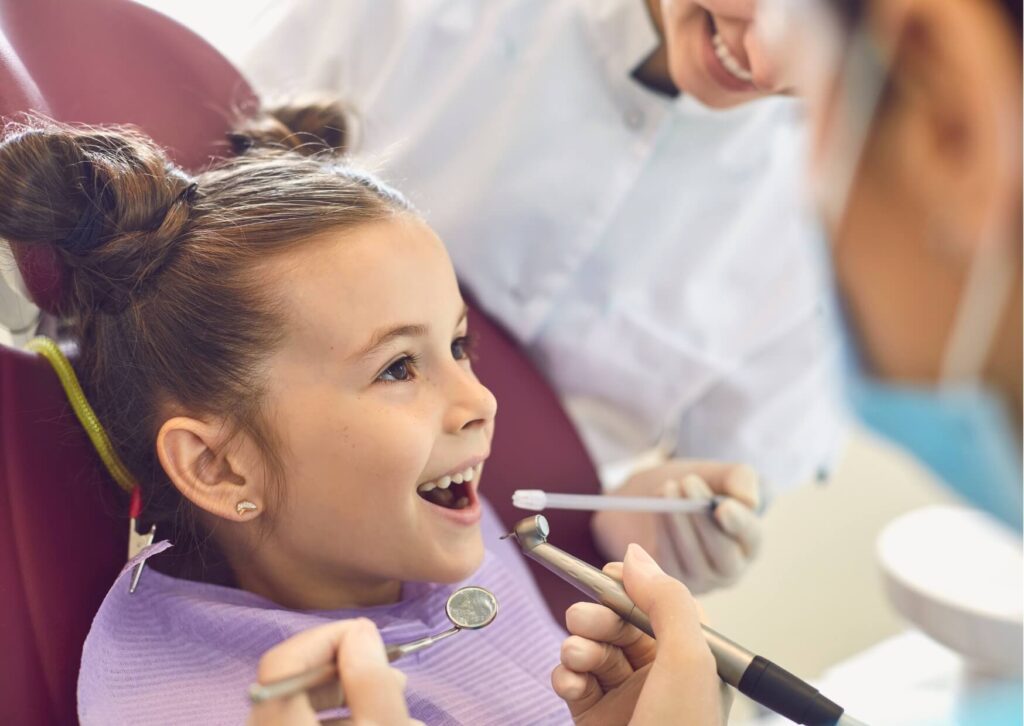
Sealants can last for years, but they should be checked regularly. Chewing forces, grinding, and normal wear can gradually thin the material. Sometimes part of a sealant comes off while the rest stays in place.
That does not always create an emergency, but it can reduce protection. During routine check-ups, the dentist checks whether the sealant still fully covers the grooves and whether there are signs of wear, leakage, or developing decay.
If needed, the sealant can often be repaired or replaced. This is one reason regular preventive visits still matter after sealants are placed. A sealant is a helpful layer of protection, not a one-time guarantee.
Families sometimes assume a sealed tooth can never get a cavity. That is not correct. A tooth can still decay around an incomplete sealant, on the sides of the tooth, or when brushing and diet remain high risk.
Sealants are meant for prevention, not for treating active dental pain. If a child already has symptoms, the tooth needs an evaluation rather than assuming a sealant is the answer.
Seek prompt dental care if a child has tooth pain that wakes them at night, visible swelling, gum tenderness near a tooth, worsening sensitivity, a dark hole in a tooth, fever with dental pain, or trouble chewing on one side. These signs may suggest active decay, pulp irritation, or infection. The pulp is the soft inner part of the tooth that contains nerves and blood vessels.
A chipped sealant without pain is usually not urgent, but it should still be mentioned at the next dental visit or sooner if the office advises. If symptoms are severe, worsening quickly, or linked with facial swelling, same-day dental assessment is appropriate. If breathing or swallowing is affected, urgent medical care is necessary.
Sealants work best as part of a larger prevention plan. They do not cancel out the effects of frequent sugar exposure or inconsistent brushing. Daily habits still matter.
Parents can support sealed teeth by helping children brush thoroughly, especially along the gumline and around back teeth. Flossing is still important because sealants protect the chewing surface, not the spaces between teeth. Regular dental visits also allow the team to check whether the sealants are still intact.
It also helps to look at patterns rather than isolated treats. Frequent sipping of juice, sports drinks, or sweetened milk can keep the mouth acidic for long periods. In practical terms, fewer sugar exposures often matter more than perfection at any one meal.
Small routines can make a big difference over time. A child may not remember every brushing reminder, but steady protection adds up.
If a dentist recommends sealants, it is reasonable to ask which teeth are at risk, whether any grooves already look suspicious, how well the child can clean those areas, and how the office checks sealants over time. Good recommendations should be specific, not automatic.
Sealants are one of the clearest examples of conservative dentistry. They protect healthy teeth before damage starts, and that approach often serves children well. Prevention is rarely dramatic, but it is often the gentlest path.
If your child has newly erupted molars, a history of cavities, or deep grooves in the back teeth, a dental visit can help clarify whether sealants make sense now or whether monitoring is better. That conversation is often the best next step when you want prevention to feel thoughtful, not rushed.
At My Teeth & Me in New York, NY, we provide sealants & restorations for children and families from Yorkville to Lenox Hill; call (646) 403-3430 to schedule an appointment.
Sealants usually do not hurt. The process is typically quick, does not involve drilling, and often does not require numbing.
Yes. Sealants reduce risk on the chewing surface, but cavities can still form on other parts of the tooth or if a sealant wears away.
No. They are most often used on permanent molars, but some baby teeth may be sealed when the tooth shape and cavity risk make that helpful.
A dentist looks at the depth of the grooves, how recently the teeth erupted, cavity history, and how easy those teeth are to clean. The decision is based on the child’s specific risk pattern.
It is usually not an emergency if there is no pain, but the tooth should be checked. A dentist may recommend repair or replacement to restore protection.
A child’s first tooth can feel like a quiet milestone. It often brings a practical question at the same time: when should I take my child to the dentist?
The short answer is simple. A child should usually see a dentist by the first birthday, or within six months after the first tooth erupts. That timing matters more than many parents realize. Baby teeth are temporary, but they help with chewing, speech development, jaw growth, and spacing for future adult teeth.
An early dental visit is not just about checking for cavities. It is also a chance to talk about feeding habits, fluoride exposure, oral cleaning, teething, and how your child’s mouth is developing. Early dental care often works best when it is steady rather than reactive. A calm visit before there is pain can help a child build trust, and that trust is part of creating a dental home.
At My Teeth & Me in New York, NY, we offer gentle dental check-ups designed for little ones and families seeking steady, preventive care.
Many parents assume a dentist is only needed once a child has several teeth or can sit still for an exam. In reality, early childhood caries can begin soon after teeth come in, especially when feeding and hygiene habits raise cavity risk.
A dentist can look for early changes in the enamel, the hard outer layer of the tooth. At this stage, there may be no pain at all, which is exactly why prevention visits matter.
These early appointments can also identify habits or patterns that may affect oral health later. Thumb sucking, pacifier use, mouth breathing, delayed tooth eruption, and visible plaque buildup are all worth discussing early.
For many families, the first visit is mostly educational. The dentist may examine the gums, tongue, bite, and tooth surfaces, then explain what looks normal, what should be watched, and when follow-up should happen.
Most first visits are brief and low pressure. For infants and toddlers, the dentist may examine the mouth while the child sits in a parent’s lap.
The appointment often includes a review of medical history, feeding habits, teething, oral hygiene, and any concerns about pain, discoloration, or injury. If the child is older and comfortable, the team may also gently clean the teeth with a professional dental cleaning.
Some practices use a knee-to-knee exam for very young children. In that setup, the parent and dentist sit facing each other with the child supported between them so the mouth can be checked safely and quickly.
The goal is not perfect behavior. The goal is a useful baseline, a safe exam, and a positive first experience.
Sometimes the question is not whether a child needs a first dental visit by age one. Sometimes the question is whether the visit should happen much sooner.
Schedule a prompt dental evaluation if there is tooth pain, facial swelling, or a broken tooth. These signs can point to decay, infection, or trauma that needs timely assessment.
Other reasons to book earlier include white chalky spots on teeth, brown or black areas, gum swelling, ongoing bad breath, bleeding gums, trouble chewing, or sensitivity to cold. None of these signs confirms one diagnosis, but each deserves attention.
If a tooth is knocked out, pushed out of position, or the mouth has significant bleeding after a fall, contact a dentist urgently. If there is uncontrolled bleeding, trouble breathing, increasing facial swelling, fever with swelling, or concern for head injury, urgent medical care is appropriate. You can read more about common urgent problems and what to do in our dental emergency care.
These situations do not always require emergency treatment, but they should not be watched indefinitely. If symptoms are getting worse or the cause is unclear, a dental exam is the safest next step.
After the initial appointment, many children are seen about every six months. That schedule gives the dentist time to monitor growth, clean the teeth when needed, and catch small problems before they become painful.
Some children may need visits more often. This can happen when there is a history of cavities, visible plaque buildup, enamel defects, orthodontic concerns, or habits that raise risk.
A child with low cavity risk and good home care may still follow the standard recall schedule. The exact timing should come from a dentist who has examined the child and understands the full picture.
The most helpful preparation is often simple. Clean the gums before teeth erupt with a soft cloth, then begin brushing as soon as the first tooth appears.
For practical guidance on when and how to start, see our guide to brushing baby's teeth. Use a soft, age-appropriate toothbrush and keep the routine calm and consistent.
It also helps to talk about the visit in neutral, reassuring language. Try not to promise that nothing will feel strange, and avoid words that may create fear before the appointment even starts.
For more practical ideas, read our tips for tots.
A first visit does not require perfect behavior to be successful. A calm introduction is often enough.
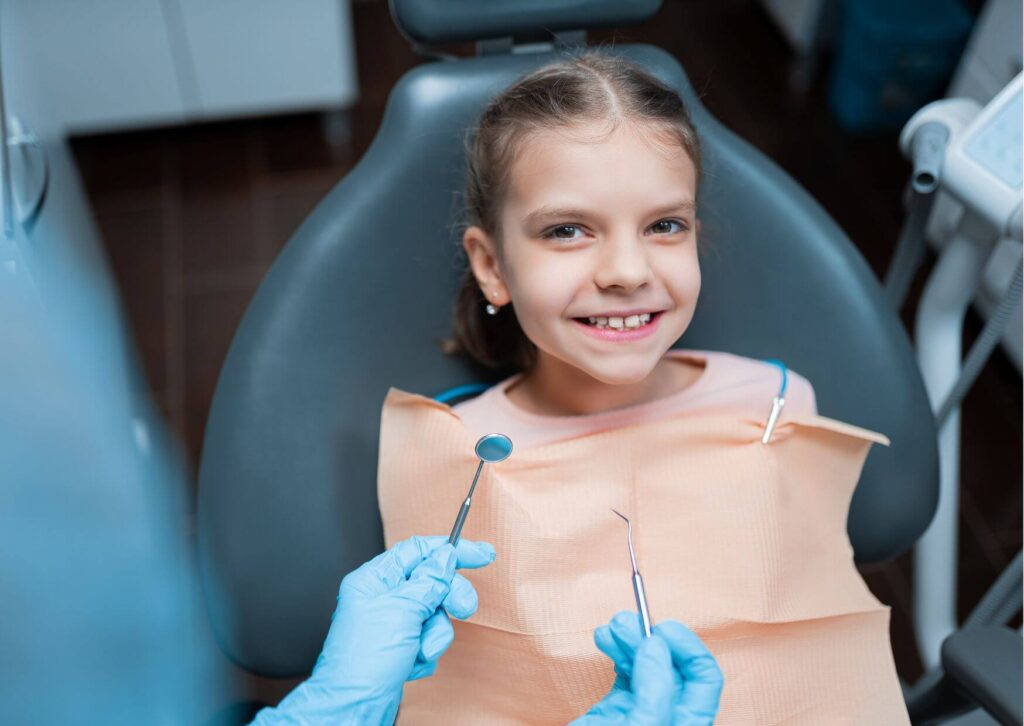
Because baby teeth eventually fall out, some families are told not to worry too much about them. That advice is misleading.
Baby teeth hold space for adult teeth and help children bite, chew, and speak clearly. Infection or early tooth loss can affect comfort, sleep, eating, and how permanent teeth come in later.
Untreated decay in young children can progress quickly. What starts as a faint white spot may become a cavity, then pain, then swelling if it is not addressed.
When decay advances, a dentist may suggest dental fillings to restore comfort, or protective sealants & restorative options to help prevent future cavities. Early care protects more than teeth alone. It supports development, routine, and a child’s sense that oral care is a normal part of health.
If the question is when should I take my child to the dentist, the clearest answer is this: by age one, within six months of the first tooth, and sooner if there are symptoms, injury, or anything that does not seem right.
If that timing has already passed, it is still worth scheduling now rather than waiting for pain to make the decision. One thoughtful visit can help create a healthier rhythm for years to come.
A pediatric dentist or a general dentist who treats children can help set the right schedule from there.
At My Teeth & Me in New York, NY, we offer gentle dental check-ups for infants and children and also welcome families from nearby Yorkville and Lenox Hill; call us at (646) 403-3430 to schedule an appointment.
Usually by the first birthday or within six months after the first tooth appears. This gives the dentist a chance to check development and talk about prevention before problems begin.
Yes. Even a small number of teeth can develop decay, and early visits help families learn how to protect them.
A child can have early enamel changes or cavity risk without pain. Preventive visits are helpful because many dental problems start quietly.
No. Waiting until all baby teeth are in is later than recommended for a first visit. Earlier evaluation is the standard approach.
Pain with swelling, fever, facial asymmetry, trauma, or trouble eating should be assessed promptly. Severe swelling, uncontrolled bleeding, breathing difficulty, or concern after a major injury needs urgent medical attention.
"Growth arrives quietly, then all at once." A first loose tooth may seem like a small milestone, but for many families it feels big. It is often the first visible sign that a child is moving into a new stage of growth.
If you are wondering when do boys lose their first tooth, the short answer is that most children begin losing baby teeth at about age 6. A common range is 5 to 7 years old, though some healthy children start a little earlier or later. Standard baby teeth eruption charts can help show the usual timing, and you can also read more about when children lose teeth.
Boys do not always lose teeth later than girls. While some children develop slightly earlier or later, family pattern and overall tooth development usually matter more than sex alone.
At My Teeth & Me in New York, NY, our dental check-ups support families through stages like first tooth loss and can help with questions about timing.
In many children, the first tooth to fall out is one of the lower front baby teeth, called the lower central incisors. These are the two small teeth in the center of the lower jaw.
The upper front baby teeth often follow soon after. This usually matches the order in which baby teeth first came in.
A baby tooth becomes loose because its root gradually dissolves as the permanent tooth moves into place. This process is called root resorption.
Tooth loss follows development, not just the calendar. Some children are early dental developers, while others move through the same stages more slowly.
Family history can play a role. If parents lose baby teeth early or late, their child may follow a similar pattern.
The age when baby teeth first erupted can also offer clues. See our guide on average age first tooth for more background.
General health, nutrition, and space in the jaws may also affect timing. Sometimes a baby tooth stays firm longer because the permanent tooth underneath is developing more slowly or coming in at a different angle.
A normal loose baby tooth usually wiggles more over days or weeks instead of falling out all at once. Mild gum soreness, slight tenderness when chewing, or a little bleeding when the tooth comes out can all be normal.
The gum around the tooth may look a little fuller as the permanent tooth starts to rise. If a new tooth appears behind a baby tooth, that can still be part of normal development. Learn more about a tooth growing behind or have a dentist check it if the baby tooth is not loosening.
Try not to encourage a child to pull a tooth that is still firmly attached. If moving it hurts and it barely wiggles, it usually needs more time.
Some healthy children do not lose their first baby tooth until age 7 or a little later. By itself, that does not always mean something is wrong.
Still, it is a good idea to have a dentist check if no baby teeth are loose by around age 7 to 8, especially if baby teeth came in on time but natural shedding has not started. Guidance on delayed tooth eruption can also help families understand when an evaluation makes sense. Consider scheduling a check-up to have a dentist evaluate eruption and recommend next steps.
A dentist may look for delayed eruption of permanent teeth, missing permanent teeth, crowding, or a baby tooth root that is not resorbing as expected. Sometimes the answer is simple monitoring.
If a child is much younger than expected for natural tooth loss, do not assume it is normal shedding. Our article on premature tooth loss explains possible causes and when to seek care.
Not every loose tooth is loose because it is ready to come out. Trauma, infection, or gum problems can also make a tooth mobile, though this is less common in young children.
Seek prompt dental care for red flags that need faster attention. These include significant pain, facial swelling, pus, fever, strong new bad breath, swelling around one tooth, or bleeding that does not stop.
A tooth that became loose after a fall or sports injury should also be examined. If alignment or crowding seems to be part of the problem, an orthodontic evaluation can help determine whether guidance or early treatment is appropriate.
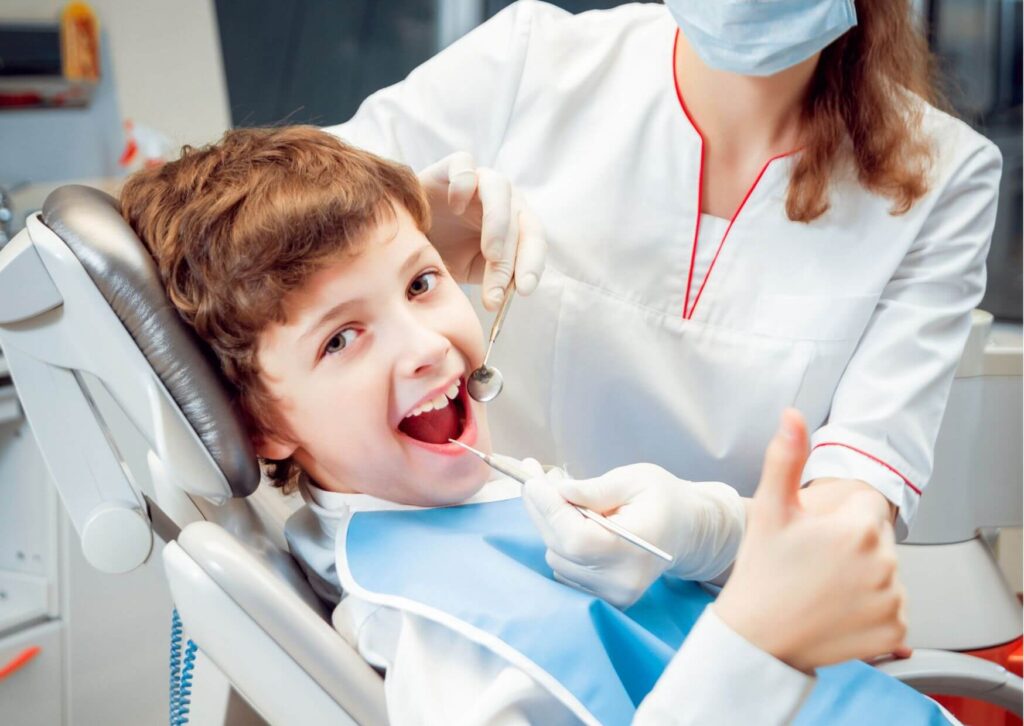
A dentist usually checks the eruption pattern, how loose the tooth is, and the health of the gums. The goal is to tell the difference between normal development and a problem that needs follow-up.
In some cases, dental X-rays help show whether the permanent tooth is present and how it is positioned. This can explain why a baby tooth is not loosening or why a new tooth is coming in somewhere unexpected.
Most of the time, the answer is reassuring. Many families simply need confirmation that the timing is still within a broad normal range.
The best approach is usually patience. Gentle brushing, normal oral hygiene, and avoiding constant picking at the tooth are often enough.
Soft foods can help if the area feels tender, but many children can keep eating normally unless chewing hurts. If discomfort is strong, lasts, or seems hard to explain, a dental exam is more helpful than repeated home remedies.
For newly erupted permanent teeth, protective care such as sealants & restorations may help lower cavity risk as enamel matures.
There is something meaningful about a loose tooth. The body makes room by letting go, and that quiet process makes growth easier to see. For the full sequence, see lose all baby teeth.
If the timing seems off, the pattern looks unusual, or the tooth is painful instead of simply wiggly, a dentist can help sort out what is normal and what needs closer attention. That reassurance is often the most helpful next step for families.
If you'd like an exam, My Teeth & Me in New York, NY offers dental check-ups and sees families from Yorkville and Lenox Hill; call (646) 403-3430 to schedule.
Sometimes, but not always. Girls may begin dental development slightly earlier on average, but the difference is small and many boys and girls follow overlapping timelines.
Yes. Losing a first baby tooth at age 5 can be completely normal, especially if the child’s overall growth and dental development are on track.
A baby tooth that is barely attached may come out during normal eating or with very gentle movement. A tooth that is still firmly attached should not be forcefully pulled because that can cause pain and bleeding.
This can happen and is sometimes called a shark tooth pattern. It may resolve as the baby tooth loosens more, but a dentist should assess it if the baby tooth stays firm or the new tooth seems crowded. See our post on tooth growing behind for details.
Consider an evaluation if no baby teeth are loose by about age 7 to 8, or sooner if there is pain, swelling, injury, or an unusual eruption pattern.
“Every child begins the world again.” That idea fits dentistry more than many people expect. A child’s mouth is always changing, and each stage brings its own needs, patterns, and questions.
A pediatric dentist is a dentist who focuses on the oral health of infants, children, adolescents, and often patients with special health care needs. After dental school, pediatric dentists complete additional specialty training centered on child development, behavior guidance, growth of the jaws and teeth, prevention of dental disease, and treatment approaches designed for younger patients.
In simple terms, this is a dentist trained not only to treat teeth, but also to care for a developing child in a way that feels safe, calm, and age-appropriate. Learn more about providing the right dental care for your children. That matters because children are not just small adults. Baby teeth, erupting permanent teeth, oral habits, injury patterns, and even the way a child experiences a dental visit can be very different from what happens in adulthood.
A good pediatric dental visit can support more than the mouth alone. When a child feels secure, the body often relaxes, breathing steadies, and care becomes easier. Fear can tighten muscles and heighten discomfort, while trust often helps a child tolerate exams, cleanings, and treatment with less distress.
At My Teeth & Me, families in New York, NY, and nearby areas can find pediatric dentistry and gentle dental checkups designed to support children through every stage of growth. We focus on creating calm, positive experiences that help children feel comfortable while building healthy oral habits early on.
Many general dentists treat children well, especially for routine care. Still, pediatric dentistry is built specifically around the needs of growing patients, and that extra focus can make a meaningful difference when a child is very young, anxious, medically complex, or developing an oral problem tied to growth.
A pediatric dentist is trained to understand how primary teeth, also called baby teeth, guide speech, chewing, spacing, and the eruption path of adult teeth. These dentists also learn how oral habits such as thumb sucking, prolonged pacifier use, and tongue posture may affect bite development over time.
The office setting is often different too. Pediatric dental practices are usually designed to reduce fear and support cooperation. That may include shorter appointments, child-friendly communication, and techniques that help children understand what is happening before treatment begins.
After becoming a dentist, a pediatric specialist completes additional residency training. This advanced education commonly includes child psychology, sedation awareness, management of dental injuries, treatment of extensive tooth decay in children, and care for patients with developmental, behavioral, or medical conditions. Families who want to learn more can read about pediatric sedation.
Some people assume baby teeth are not important because they eventually fall out. In reality, baby teeth help hold space for adult teeth, support nutrition, and affect comfort, sleep, and daily function. Untreated disease in these teeth can still cause pain, infection, swelling, and trouble eating or concentrating at school.
Pediatric dentists do much more than routine cleanings. Their work often includes prevention, early diagnosis, and treatment planning that respects both the child’s current comfort and long-term dental development.
Common reasons for a visit include tooth decay, delayed or unusual tooth eruption, dental injuries, crowding concerns, gum irritation, oral habits, and sensitivity. In many cases, the goal is to catch a small issue before it becomes painful or harder to manage.
Tooth decay remains one of the most common childhood health problems. Cavities may begin as faint white areas where minerals are being lost from the enamel, the hard outer layer of the tooth. Over time, these areas can darken, soften, or form holes.
Children may not always describe pain clearly. Instead, a parent may notice chewing on one side, avoiding cold foods, waking at night, irritability during meals, or visible spots on the teeth. When a cavity needs repair, pediatric teams often offer gentle dental fillings to restore comfort and function. You can also learn how to prevent early childhood caries.
A pediatric dentist also watches how the teeth and jaws are developing. Some bite issues are inherited, while others may be influenced by habits, airway patterns, or the timing of tooth loss. Early recognition does not always mean immediate treatment, but it can help a family understand what to monitor.
Falls, sports injuries, and playground accidents are common in childhood. A chipped tooth may look minor but can sometimes involve deeper structures, including the nerve tissue inside the tooth. A tooth that is pushed out of position, becomes loose after trauma, or causes lip or gum bleeding should be assessed promptly.
Some children benefit from a dental team that is especially experienced in sensory sensitivity, developmental differences, complex medical history, or coordination with other healthcare providers. In these situations, specialized pediatric dental care can make visits safer and more predictable.
Most children should have a dental visit by the first birthday or within about six months of the first tooth appearing. That may sound early, but early visits are usually simple, brief, and preventive. These pediatric check-ups are a good time to notice risk early and build a calm relationship with dental care.
The purpose is not only to look for cavities. It is also to check oral development, discuss feeding and drinking habits, review brushing technique, and identify risk factors before damage starts. This is often the easiest time to build a calm relationship with dental care, before pain or fear enters the picture. See our tips for first visits to help your child feel calm and prepared.
Early timing is one of the most helpful parts of pediatric dentistry. Families often wait until a child is uncomfortable, and by then the first dental experience may already carry stress. A preventive first visit usually creates a much better foundation. This also helps with creating a dental home.
Schedule an earlier evaluation if there is mouth pain, swelling, a broken tooth, dark spots, white chalky areas on teeth, bleeding that does not make sense, trouble eating, or injury to the mouth. Persistent bad breath can also deserve a closer look, especially if brushing does not explain it.
If symptoms are severe, worsening, or paired with fever, facial swelling, or trouble swallowing, seek urgent dental or medical care. Those can be urgent red flags because infection in the mouth can sometimes spread beyond a single tooth.
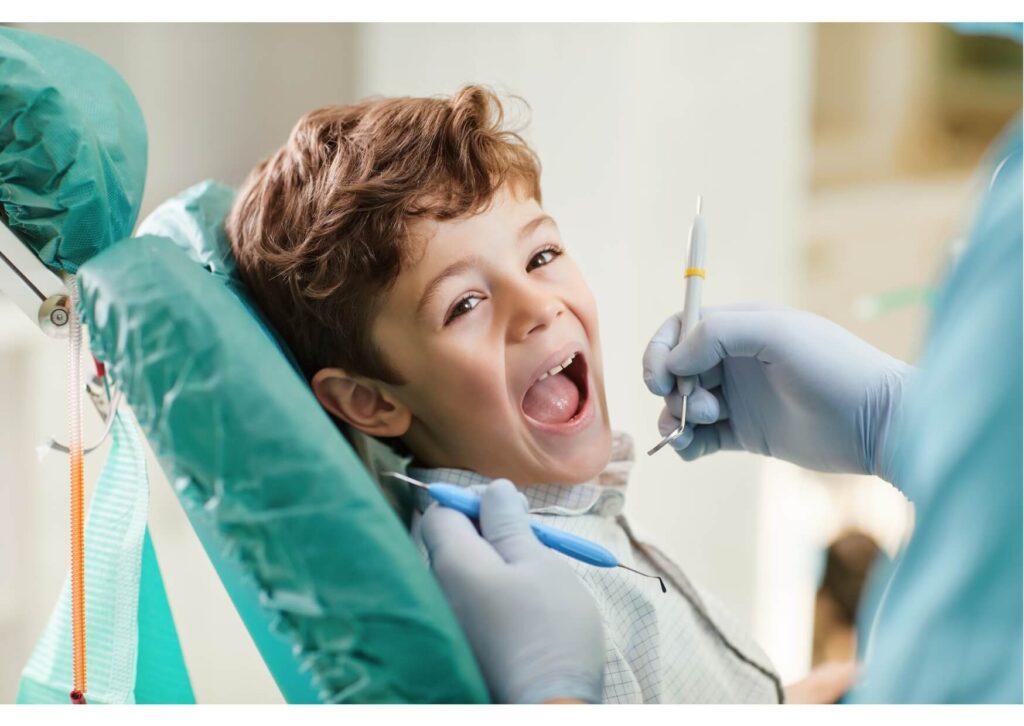
A first appointment usually includes a review of medical history, feeding and oral habits, tooth eruption, and any current concerns. The dentist examines the teeth, gums, bite, and soft tissues of the mouth. Depending on age and risk, dental X-rays may be recommended to look for decay between teeth or to assess development below the gums.
Professional cleanings, fluoride treatments, and sealants & restorations may be discussed when appropriate. Fluoride helps strengthen enamel and lower the risk of decay. Sealants are protective coatings placed on the chewing grooves of certain teeth to reduce cavity risk in areas that are hard to clean well.
Behavior guidance is another important part of the visit. This means using communication and pacing strategies that help a child understand and tolerate care. The goal is not force. The goal is trust, predictability, and a safe experience.
A calm voice, simple words, and a steady routine can settle the nervous system. That may sound gentle, but it is also practical. A regulated child is often easier to examine, easier to treat, and less likely to carry dental fear into adulthood.
For many families, the choice depends on age, temperament, and dental needs. A pediatric dentist may be especially helpful for infants and toddlers, children with significant anxiety, children who have had a difficult prior dental experience, and those with extensive decay, trauma, or developmental and medical complexity.
It may also be the right fit if a child needs close monitoring of growth, habit-related bite changes, or preventive support because cavities have developed early. Even when treatment needs are straightforward, some parents simply prefer a practice designed around children from the start.
You do not need to decide based on fear alone. Think about where a child is most likely to receive clear communication, patient pacing, and age-appropriate care. That practical fit often matters more than labels.
| Question | Why It Matters |
| Do you regularly treat infants, toddlers, and school-age children? | Experience varies by practice. |
| How do you help anxious children during visits? | Communication style can shape the whole experience. |
| How do you handle dental injuries or urgent tooth pain? | Access matters when problems arise quickly. |
| Do you care for children with sensory, developmental, or medical needs? | Some families need a team with added expertise. |
| How do you approach prevention for cavity-prone children? | Prevention plans should be individualized. |
These questions do not replace professional judgment, but they can help a family find a setting that feels both competent and calm.
Daily habits shape oral health more than most single appointments do. Brushing with a fluoride toothpaste, limiting frequent sugary drinks and sticky snacks, and keeping regular dental visits can lower the chance of decay substantially.
Children often benefit from routine. A consistent morning and bedtime brushing rhythm, especially when an adult supervises or helps, tends to work better than aiming for perfection. If a child resists brushing, the answer is usually not force alone. It is often better to make the routine predictable, brief, and steady.
There is wisdom in repetition. Small daily habits shape long-term health. Oral care works much the same way. A few grounded routines, practiced with patience, usually matter more than occasional bursts of effort.
One practical approach is to pause for a slow breath before brushing with a resistant child. That moment can soften tension for both child and caregiver. It will not treat a cavity, but it may make the routine more sustainable, and sustainable routines are what protect teeth over time.
Some dental problems can wait a few days for a routine appointment, but others should be assessed quickly. A child should be seen promptly for facial swelling, significant mouth pain, a knocked-out permanent tooth, a tooth that changes position after injury, pus near the gums, or bleeding that does not stop as expected.
Fever with dental pain, swelling that seems to spread, trouble opening the mouth, trouble swallowing, or reduced drinking can signal a more serious problem. These symptoms do not always mean a dangerous infection, but they do deserve timely evaluation.
If a child seems unusually sleepy, has difficulty breathing, or swelling is affecting the face or neck, seek immediate medical care. In these moments, facial swelling with fever or trouble swallowing is not something to watch at home and hope improves.
General information can help families recognize patterns, but it cannot diagnose a specific child from a distance. When symptoms are persistent, worsening, severe, or simply unclear, a dental professional should evaluate them directly.
Parents often worry that every missed brushing session or every sweet snack has caused lasting harm. Usually, oral health is more layered than that. Teeth respond to patterns over time, and there is room to reset routines, ask questions, and move forward with better support.
If the phrase what is a pediatric dentist has led you here, the simplest answer is this: it is a dental specialist for children, trained to protect developing mouths with skill that matches childhood itself. The deeper answer is that pediatric dentistry also protects trust. It helps children learn that healthcare can be careful, respectful, and safe.
A steady affirmation may help more than people expect: my child’s health can be supported one calm step at a time. And perhaps this one too: with patience, clear care, and timely guidance, growing smiles can find their way.
A positive dental experience early in life can make a lasting difference in your child’s oral health and confidence. If you are looking for compassionate pediatric dentistry in New York, NY, our team at My Teeth & Me is here to provide gentle checkups, preventive care, and same-day support for growing smiles.
Call (646) 403-3430 today to schedule an appointment for your child and visit our New York office serving families throughout Yorkville, Lenox Hill, Midtown East, and nearby communities.
Not always in every situation, but a pediatric dentist has extra specialty training focused on children. That can be especially helpful for very young children, anxious patients, complex dental problems, or special health care needs.
Usually by age one or within six months of the first tooth erupting. Early visits are mainly preventive and help identify risk before pain begins.
No. They treat baby teeth, developing permanent teeth, gums, oral habits, injuries, and growth-related concerns throughout childhood and adolescence.
Usually no. Baby teeth still matter for comfort, eating, speech, and space for adult teeth. Untreated decay can worsen and may lead to pain or infection.
Seek prompt care if a tooth is knocked out, pushed out of place, broken with pain or bleeding, or if there is swelling, ongoing bleeding, or difficulty eating after the injury.
For many people, a first dental visit carries more than logistics. It can bring up old memories, uncertainty, or a quiet tension in the body that starts before the appointment even begins. A waiting room, the sound of instruments, or simply not knowing what comes next can make the experience feel bigger than it is.
One helpful way to think about a first dental appointment is as a conversation before it is a procedure. Dentistry works best when the mouth is treated as part of the whole person. Stress can heighten pain, dry the mouth, and make even routine care feel harder, while calm and trust often make the visit smoother from the first few minutes.
If you are wondering what to expect at a first dental appointment, the visit is usually straightforward. It often includes a health history, a discussion of symptoms or concerns, an exam of the teeth and gums, and in many cases dental X-rays, which are images used to look for problems that cannot be seen directly. Some appointments also include a cleaning, though that depends on the condition of the gums, the amount of buildup present, and whether the dentist wants to review findings first.
At My Teeth & Me, families can expect a thoughtful and supportive approach to pediatric dentistry and routine dental checkups for children. Our team helps create a calm environment for first visits while guiding parents through each step of their child’s dental care experience in New York, NY.
A first appointment is not only about checking for cavities. It creates a baseline, meaning a starting record of how the teeth, gums, bite, and oral tissues look now. That baseline helps a dentist notice changes over time, which matters because many dental problems begin quietly.
For example, tooth decay may start as a small weakened area in enamel before it becomes painful. Gum inflammation may cause mild bleeding long before more advanced disease develops. A careful first exam can also identify cracked fillings, signs of grinding, dry mouth, eruption patterns, and soft tissue changes inside the cheeks, tongue, and lips.
This is one reason routine dental care matters even when nothing hurts; it helps in creating a dental home. Early problems are often easier to treat and usually less disruptive than issues found after pain, swelling, or infection begins.
The first part of the appointment is usually administrative, but it is still important. You may be asked to complete forms about medical history, medications, allergies, past dental treatment, and any current symptoms. This matters because oral health and overall health are closely connected. Conditions such as diabetes, acid reflux, autoimmune disease, and dry mouth can affect dental findings and treatment planning.
It is also common to discuss practical details such as insurance, previous X-rays, and the reason for the visit. If there is dental anxiety, this is the right time to say so clearly. A good dental team can often adjust the pace, explain each step before starting, and make the visit feel more predictable.
If there is pain, bleeding, sensitivity, jaw clicking, bad breath, or concern about a specific tooth, mention it early. Even small details can help guide the exam.
The exam usually begins with a visual assessment of the teeth and gums. The dentist may look for cavities, worn enamel, broken restorations, plaque and tartar buildup, gum recession, and signs of inflammation. Tartar is a hardened plaque that cannot be removed with regular brushing alone.
The gums are often checked for redness, swelling, bleeding, and pocket depth. Gum pockets are the spaces between the teeth and gums. When they become deeper than normal, it can suggest periodontal disease, which is a chronic infection and inflammation affecting the supporting structures around the teeth.
The dentist may also evaluate the bite, jaw movement, and signs of clenching or grinding. In many offices, the soft tissues are examined as well, including the tongue, cheeks, palate, and floor of the mouth. This is a routine part of screening for ulcers, irritation, and less common but important abnormalities.
If the visit is because of pain, swelling, or a broken tooth, the dentist may focus closely on that area first. Additional tests may be used, such as tapping on a tooth, checking temperature sensitivity, or taking a targeted X-ray. These steps help narrow down whether the issue may involve decay, a crack, gum inflammation, or the nerve inside the tooth.
Pain does not always point to a single cause. A toothache may come from decay, grinding, a cracked tooth, sinus pressure, gum disease, or referred pain from another area, which is why an exam matters.
In many first visits, yes. Dental X-rays are often recommended because they show areas that cannot be seen during a visual exam alone, such as between teeth, below fillings, around roots, and in the jawbone. They may help detect hidden decay, bone loss, impacted teeth, cysts, or infection.
Whether X-rays are taken depends on several factors, including age, symptoms, recent imaging, pregnancy status, and clinical findings. If you had recent dental X-rays at another office, the new office may be able to request them. That can sometimes reduce repeat imaging. The guidance on dental X-rays supports using radiographs based on individual need rather than as a one-size-fits-all routine.
It is reasonable to ask why a specific X-ray is needed. In most cases, the answer should be simple and tied to diagnosis, not routine for its own sake.
Sometimes, but not always. Many people expect a cleaning at the first appointment, and in some offices that does happen on the same day. In other cases, the dentist may complete the exam first and schedule the cleaning for a separate visit.
This often depends on the condition of the gums and the type of cleaning needed. A routine preventive dental cleaning is different from periodontal treatment for active gum disease. If there is significant tartar buildup, bleeding, or deeper gum pockets, the office may recommend a different type of visit focused on gum therapy rather than a standard polishing appointment.
That distinction matters. Not every cleaning is the same, and the safest plan depends on what the exam shows.
| Part of the Visit | What It Usually Includes | Why It Matters |
| Check-in and forms | Medical history, medications, allergies, dental concerns | Helps the team plan safe, appropriate care |
| Initial conversation | Symptoms, anxiety, goals, past dental experiences | Builds trust and guides the exam |
| Exam | Teeth, gums, bite, soft tissues, jaw function | Identifies visible concerns and establishes a baseline |
| X-rays if needed | Images of teeth, roots, and bone | Finds issues not visible during the exam |
| Cleaning in some cases | Removal of plaque and tartar, polishing | Supports prevention when appropriate |
| Treatment discussion | Findings, next steps, costs, timing | Helps you make informed decisions |
Some questions may seem unrelated at first, but they often help connect the dots. You may be asked whether teeth are sensitive to cold, whether gums bleed when brushing, whether there is bad breath, dry mouth, jaw tension, headaches, or a habit of clenching at night.
You may also be asked about smoking, vaping, mouth breathing, snoring, reflux, or frequent sugary drinks. These details can affect cavity risk, gum health, enamel wear, and healing. A dentist is not looking for perfect habits. The goal is to understand patterns that may explain what is happening in the mouth.
This is also a good time to speak openly about cosmetic goals, missing teeth, fear of treatment, or cost concerns. Honest information usually leads to better planning.
A little preparation can make the visit feel calmer. Bring a list of medications, your insurance card if relevant, and the name of any medical conditions being treated. If you have recent dental records or X-rays from another office, ask whether they should be sent in advance.
It also helps to arrive a bit early so forms do not feel rushed. If anxiety is part of the picture, consider writing down a few concerns beforehand. Many people forget questions once they are in the chair.
If you are bringing a young child, these tips for taking tots can help make the visit smoother. If your child is an infant, see oral health for infants for early guidance.
A practical approach is best. Brush and floss normally, eat as you usually would unless the office tells you otherwise, and wear something comfortable. There is no need to do anything elaborate before a standard dental visit.
Not every first visit is routine. If there is facial swelling, fever, pus, a bad taste with increasing pain, trauma, uncontrolled bleeding, or trouble opening the mouth, the situation may need prompt evaluation. Swelling that spreads, pain that rapidly worsens, or difficulty swallowing can signal a possible dental infection that needs urgent care.
A knocked-out adult tooth, a broken tooth after injury, or significant swelling after dental pain should not wait for a standard checkup slot. In those situations, contact a dentist promptly. If breathing or swallowing is affected, seek emergency medical care. These dental emergency signs can help clarify when symptoms need urgent attention.
These red flags do not always mean a dangerous problem, but they are important enough to take seriously.

After the exam, the dentist will usually review the findings in plain language. This may include which areas look healthy, what needs monitoring, and whether any treatment is recommended. Common next steps may include a cleaning, a filling, monitoring a suspicious area, or further evaluation of gum disease, wisdom teeth, or bite-related wear.
If restorative work is needed, the team may discuss options for restorative care such as fillings or sealants and the timing that makes sense for your child. For guidance on ongoing care, see right dental care for children.
In a well-run office, the discussion should separate urgent needs from routine maintenance and elective concerns. That distinction helps patients make decisions without feeling pressured. If something is unclear, ask for an explanation in simple terms. A good treatment plan should make sense to you.
If costs or timing are a concern, say so directly. There is often more than one reasonable sequence for care, especially when the issue is not urgent.
There is something quietly restorative about being examined with care and clarity. The mouth holds evidence of daily life, stress, nourishment, sleep, and habit. A first dental appointment can feel like a reset, not because everything must be fixed at once, but because uncertainty begins to soften when the condition of the teeth and gums is finally understood.
If the visit brings nervousness, that does not mean anything is wrong with you. It means the body is trying to protect itself from the unfamiliar. Often, the most grounding thought is also the simplest one: this appointment is a beginning, and beginnings do not need perfection.
A gentle inner reminder can help: I am allowed to ask questions, take my time, and receive care with steadiness.
And one more, if you need it in the waiting room: I can meet this moment with a softer jaw, a slower breath, and enough courage for the next step.
A positive first dental experience can help build healthy habits that last for years. At My Teeth & Me, families receive compassionate pediatric dental care in a calm and welcoming environment designed for children of all ages.
Whether your child needs a routine dental checkup or a gentle first dental appointment, call (646) 403-3430 to schedule an appointment in New York, NY, serving families throughout Yorkville, Lenox Hill, and nearby communities.
Many first visits take about 45 to 90 minutes, depending on whether X-rays and cleaning are done the same day and whether there are urgent concerns to evaluate.
A routine exam and X-rays are usually not painful, though some areas may feel tender if gums are inflamed or a tooth is already sensitive. If something hurts, say so during the visit so the team can adjust.
Not always. Some patients have a cleaning at the same visit, while others need the exam first so the dentist can decide what type of cleaning or gum care is appropriate.
Dental teams see this every day. The more useful step is simply to start now. Delayed care is common, and a respectful office will focus on what helps from this point forward.
If symptoms are severe, worsening, or include swelling, fever, trauma, or trouble swallowing, contact a dental office promptly and explain the situation. Those symptoms may need urgent evaluation rather than a standard new-patient checkup.
Understanding milk rot teeth—commonly referred to as baby bottle tooth decay—is essential for safeguarding your child’s early oral health. Baby teeth may be temporary, but their role in speech development, proper chewing, and guiding adult teeth is significant.
As leading pediatric specialists such as My Teeth and Me on the Upper East Side of New York observe daily, early prevention and timely dental care can make all the difference in a child’s long-term dental well-being.
This comprehensive guide offers parents the insights and practical steps needed to protect developing smiles.
Milk contains natural sugars that feed cavity-causing bacteria. Over time, these bacteria produce acids that break down enamel—especially when milk lingers on teeth for long periods.
Putting babies to bed with bottles exposes their teeth to sugars all night, when saliva flow naturally decreases.
Because baby teeth have thinner enamel, decay advances quickly—much faster than in adult teeth.
Night feedings without cleaning the mouth afterward are a major contributor to decay.
Even “healthy” fruit juice contains concentrated sugars that accelerate enamel breakdown.
Sharing utensils or kissing a baby’s mouth can transmit harmful bacteria.
These chalky patches are often the first sign of enamel weakening.
Color changes indicate decay has begun spreading.
Discomfort may lead babies to avoid certain foods.
Cavities may appear as small pits or brown areas.
Inflamed gums often accompany advancing decay.
Painful chewing can lead to nutritional concerns.
Baby teeth help children form sounds and speak clearly.
They act as placeholders for future adult teeth.
Untreated decay can spread quickly and cause infections.
Frequent sipping exposes teeth to continuous sugar attacks.
Skipping brushing—even in infancy—allows bacteria to flourish.
Breastmilk is healthy, but it can still feed bacteria overnight.
Expert pediatric dental teams such as My Teeth and Me specialize in identifying subtle early signs of decay in infants and toddlers.
A visual exam identifies visible discoloration or breakdown.
Low-radiation pediatric X-rays reveal decay hidden between teeth.
Dentists look for softened or weakened enamel as a sign of early decay.
Strengthens enamel and can reverse early decay.
Tooth-colored fillings restore small damaged areas.
Crowns protect heavily decayed teeth and preserve spacing.
Extraction may be required when decay reaches the pulp.
Space maintainers keep the arch stable after extractions.
Dentists may suggest preventive measures and customized care plans.
Prevention is one of the strongest focuses emphasized at My Teeth and Me, where families learn effective daily routines.
A damp cloth helps remove milk residue before teeth erupt.
Use a soft brush and fluoride toothpaste twice daily.
Offer water instead when nighttime comfort is needed.
Begin introducing cups around 12 months of age.
Water cleanses the mouth and doesn’t promote decay.
A gentle wipe after nursing helps protect enamel.
Fluoride reinforces enamel and prevents mineral loss.
Use a rice-sized amount for young children.
Dentists may recommend more frequent treatments for higher-risk children.
Repeated exposure allows bacteria more time to produce acids.
Avoid sticky snacks like fruit gummies, cereal bars, and candies.
Include crunchy fruits, vegetables, cheese, and whole foods.
Create structured feeding times rather than constant sipping.
Brushing together encourages better habits.
Consistency helps children feel comfortable with oral care.
Baby teeth have essential developmental roles.
Breastmilk can still contribute to decay when left on teeth.
Juice contains high sugar levels that harm enamel.
Nighttime discomfort often worsens as cavities deepen.
Painful chewing may cause irritability or decreased appetite.
Positive early dental experiences help prevent fear later.
Dairy, leafy greens, and fortified foods support enamel growth.
Cheese cubes, apples, yogurt, and vegetables are ideal.
Crunchy foods help remove plaque naturally.
Choose soft bristles with small heads for gentle cleaning.
Select ADA-approved formulas designed for children.
Straw and open cups reduce liquid pooling around teeth.
Early exams are key to preventing future issues.
Most children benefit from visits every six months.
Cleanings, fluoride, and personalized guidance for families.
Healthy practices become second nature with support.
Water helps maintain oral health throughout the day.
Healthy snacks reduce sugar exposure in group settings.
Premature loss may lead to crowding or misalignment.
Missing front teeth can affect clarity of sounds.
The same bacteria can continue affecting new teeth.
Even a quick wipe helps significantly.
Only offer water if a bottle is needed for comfort.
Helps cleanse the mouth and reduce acid buildup.
Located on the Upper East Side in New York, NY, at 157 E 81st St, My Teeth and Me is your dedicated patient- and family-centered pediatric dental home, led by Dr. Liora Benichou. Following American Academy of Pediatric Dentistry guidelines, our practice provides comprehensive, coordinated, and compassionate care for children of all ages.
Our services for you include pediatric cleanings and check-ups, sealants, white PBA-Free fillings, minimal-radiation handheld X-rays, fluoride varnish, and orthodontic assessments. With a warm environment and a philosophy focused on prevention, education, and personalized care, My Teeth and Me offers families the support they need to nurture healthy lifelong habits.
You can visit us on Wednesdays and Fridays from 9 AM–7 PM, and on Sundays from 9 AM–4 PM. Book an appointment and call us now.
Milk Rot Teeth may sound alarming, but with early awareness, strong daily habits, and guidance from trusted pediatric dentists, it is entirely preventable. Baby teeth play a vital role in your child's development, and protecting them today can support a lifetime of healthy smiles.
With the help of professionals from My Teeth and Me, families can ensure their children receive the best start possible.
Yes. Though breastmilk is natural, the sugars it contains can still contribute to decay when left on the teeth.
Introduce open cups or straw cups around 12 months and gradually reduce bottle use—especially at bedtime.
Most of the time yes, because untreated decay spreads quickly and can impact speech, spacing, and oral health.
We use fluoride varnish, minimally invasive fillings, personalized dietary guidance, and preventive care plans.
Teething is one of those milestones parents both look forward to and quietly dread. The excitement of seeing that tiny tooth peek through the gums… paired with the long nights, fussiness, and drooling.
If you’re wondering whether once a baby tooth breaks through, does it still hurt, you’re not alone. Many parents turn to trusted professionals—like the compassionate team at My Teeth and Me, a leading pediatric dental home in New York, NY—for reassurance and guidance.
Let’s walk through what really happens during teething, why discomfort sometimes lingers, and how you can keep your little one comfortable throughout the process.
Let’s get one thing straight: even after a tooth finally emerges, the journey isn’t over. Think of teething like a tiny mountain slowly pushing its way through soft earth—the surface breakthrough is just the beginning.
While pain often lessens once a tooth cuts through, mild soreness can linger as gum tissues adjust. In some cases, nearby teeth gearing up to erupt can add additional discomfort. So yes… sometimes it still hurts, but the worst is usually behind you.
Most babies begin teething around 6 months old, though some start earlier (and others much later). Each child follows their own timeline—just like learning to crawl or utter that first adorable “mama.”
Baby teeth don’t simply appear. They push, shift, and gradually nudge their way upward. This movement creates inflammation and pressure, which is why your baby may chew on anything that isn’t nailed down.
Once the tooth pierces the gum surface, the sharpest pain often fades. Still, the gum tissue must mold and settle around the new tooth—imagine a shoe breaking in around your foot.
Baby gums remain sensitive and slightly swollen after eruption. Your little one may continue to rub their cheeks, chew more, or fuss intermittently.
As blood flow normalizes and tissues heal, the discomfort gradually fades—typically within a few days.
Most babies experience lingering soreness for 2–3 days after the tooth breaks through.
Back molars are larger and may cause more discomfort due to their broader surface and multi-pointed shape.
If discomfort lasts over a week, it may not be teething. Consider:
When the river of drool slows to a gentle stream, relief is near.
A suddenly calm eater? A baby sleeping longer? Yes—these are green lights.
Your baby may no longer resist feedings or gum contact.
The area around the new tooth may need a little extra healing time.
Teething often happens in clusters—one tooth arrives, another is not far behind.
Even helpful relief tools can cause temporary irritation.
A clean finger applying soft pressure can work wonders.
Cold helps numb tender gums—think chilled silicone teethers.
Extra cuddles, contact naps, and slow feeding transitions offer emotional relief.
Cold but flexible… ideal for soothing small mouths.
These provide safe resistance for babies to bite and relieve pressure.
Sucking naturally soothes and reassures little ones during discomfort.
OTC meds should be used sparingly and only under professional guidance.
Topical numbing agents can be dangerous for infants—always avoid benzocaine or lidocaine gels.
A quick professional check can prevent risky choices.
This myth leads many parents to wonder once a baby tooth breaks through, does it still hurt? Yes—it can, but usually less intensely.
Mild temperature increases are normal, but high fever suggests illness.
Just like adults, babies have unique thresholds and responses.
Younger babies may experience teething differently than older toddlers.
Healthy gums tend to recover faster.
Some babies naturally experience easier teething phases.
(Even here, My Teeth and Me encourages gentle habits from day one.)
Start early—it builds habits and prevents plaque.
Sugary drinks contribute to early decay.
Schedule the first visit by age 1 or after the first tooth appears.
(My Teeth and Me excels in guiding families through this process.)
Regular checkups help catch early issues.
A trained eye sees what parents often can’t.
Pediatric dentists tailor relief strategies to your child’s needs.
Crying that lasts for hours may signal something more than teething.
If symptoms worsen or your baby refuses to eat—call.
These typically indicate illness, not teething.
Babies find reassurance in predictability.
Variety keeps relief effective.
Sometimes, love is the best medicine.
These can irritate newly erupted gums.
Water keeps gums clean and hydrated.
Pain spikes at night when distractions fade.
Longer stretches of sleep indicate relief.
Clinginess, irritability, or boundary-testing may increase.
Skin-to-skin, lullabies, and quiet time help.
You're not alone—teething is temporary.
If a toddler chips a tooth—from a fall, toy, or crash—stay calm. Assess bleeding, apply cold compresses, and call your pediatric dentist. My Teeth and Me handles such cases gently and professionally.
It’s normal for teeth to arrive in waves.
Most children have all 20 primary teeth by age 3.
Teeth often erupt in pairs or sequences, extending discomfort.
Rotate soothing strategies to keep pain manageable.
Chewing toys help strengthen oral muscles.
Around ages 6–7, baby teeth begin to loosen.
Primary teeth guide permanent tooth positioning.
Routine brushing and regular visits are essential.
Located in the Upper East Side of New York, NY, My Teeth and Me is the premier pediatric dental home offering comprehensive care. Led by Dr. Liora Benichou, our practice follows the American Academy of Pediatric Dentistry philosophy of a warm, coordinated, family-centered dental home for you.
Our services for you include cleanings, check-ups, sealants, white PBA-Free fillings, fluoride varnish, minimal radiation X-rays, and orthodontic recommendations. We offer kid-friendly scheduling Monday through Friday.
Give your child the gift of a bright, healthy smile—schedule a visit with us at My Teeth and Me today.
Teething is a journey filled with tiny triumphs and tough moments. So, once a baby tooth breaks through, does it still hurt? Sometimes—yes—but relief is usually close.
With the right techniques, tools, and expert support from caring pediatric dentists at My Teeth and Me, you can help your baby navigate teething with comfort and confidence.
Not always. Mild discomfort may continue for a few days as gums adjust.
Typically 2–3 days, though molars may cause discomfort longer.
If fussiness lasts more than a week or worsens, consult a pediatric dentist.
Cold teethers, gum massages, soft foods, and plenty of cuddles.

If you’ve ever heard that sharp “crack!” followed by your little one’s cry, you know the sinking feeling that follows.
A toddler chipped tooth can send any parent into panic mode—but breathe easy! These incidents are quite common in young children, and with the right guidance, they’re usually nothing to lose sleep over.
At My Teeth and Me, your trusted pediatric dental home in New York, NY, we specialize in treating little smiles with big care. Whether it’s a minor chip or a major fracture, we’re here to restore your toddler’s smile—and your peace of mind.
Baby teeth (also known as primary teeth) have thinner enamel and larger pulp chambers, making them more vulnerable to chips and cracks.
Unlike adult teeth, they serve as placeholders for permanent ones, so maintaining their health is crucial for proper alignment and development.
Toddlers are tiny explorers—full of curiosity, energy, and... occasional clumsiness. Whether it’s learning to walk, running in the playground, or biting into something too hard, their developing coordination makes them more likely to experience dental mishaps.
A chipped tooth might seem minor, but untreated damage can lead to infection, misalignment, or long-term dental anxiety. Early dental care fosters confidence, comfort, and healthy habits for life.
Trips, tumbles, and playground adventures often end with little scrapes—and sometimes, chipped teeth. Uneven surfaces and play equipment are frequent culprits.
Toddlers love to explore textures. Unfortunately, biting toys, furniture, or even hard snacks can cause enamel fractures.
Running into siblings, walls, or furniture can result in chipped or loosened teeth—especially if the mouth takes the impact.
Decay softens enamel, making teeth more prone to chipping. Regular check-ups at My Teeth and Me can detect and prevent such issues early.
Superficial chips that only affect the enamel—usually cosmetic and painless.
When part of the tooth edge breaks off, leaving a sharp area that may irritate the tongue or lips.
Cracks extending into the dentin layer may cause sensitivity or pain when chewing.
These severe breaks expose nerves and blood vessels, requiring urgent dental treatment.
Take a deep breath—panic doesn’t help anyone. Comfort your child and gently examine the mouth.
Use a clean cloth to stop any bleeding. If swelling appears, apply a cold compress to the cheek.
If you find the fragment, store it in milk or saline. Bring it to My Teeth and Me—it may help with restoration.
Share details: how it happened, when it occurred, and whether your child is in pain. Photos can also help!
Mention if your child bit something hard, fell, or recently had dental issues. Every detail aids accurate diagnosis at My Teeth and Me.
Apply a cold pack for 10 minutes at a time to minimize swelling and discomfort.
Use children’s acetaminophen or ibuprofen—but only under pediatric guidance.
Stick to soft foods like yogurt, mashed potatoes, or smoothies until the tooth is evaluated.
If the chip is small, your dentist may simply file down rough edges.
A tooth-colored resin restores shape and appearance—quickly and painlessly.
Crowns protect weakened teeth and restore chewing function.
If the nerve is affected, a child-friendly root canal can save the tooth and relieve pain.
A gray or brown hue could indicate nerve damage or internal bleeding.
Swelling, redness, or pus around the tooth means infection—see a dentist immediately.
Persistent discomfort signals deeper issues needing professional care.
Severe trauma to baby teeth can affect developing permanent teeth beneath them.
If the chip is small, your dentist might leave it alone. Severe damage, however, may require extraction.
Routine follow-ups ensure proper healing and prevent issues with spacing or bite.
Permanent teeth require restoration rather than extraction—bonding, crowns, or root canal therapy may be used.
Prompt care prevents infection and preserves tooth structure.
Ongoing monitoring ensures proper growth and enamel health.
Encourage caution on playgrounds and use non-slip footwear indoors.
Limit hard candies, ice, or tough snacks that strain enamel.
If your toddler participates in sports or rough play, a custom mouthguard offers vital protection.
Give your child gentle, easy-to-chew foods for a few days.
Use a soft-bristled brush and help your child clean carefully around the repaired area.
Watch for discomfort or color changes and schedule regular follow-ups.
Dr. Benichou performs thorough visual and touch-based checks to gauge severity.
Low-radiation x-rays reveal hidden fractures or root problems safely.
Scheduled appointments ensure your child’s tooth heals properly without complications.
Routine exams catch enamel weaknesses before they turn into chips.
Preventive treatments strengthen enamel and prevent decay.
Monitoring ensures healthy spacing and jaw development.
Welcome to My Teeth and Me, your pediatric dental home on the Upper East Side of New York, NY. Dr. Liora Benichou and her team believe every child deserves compassionate, family-centered care.
We provide pediatric dental services:
Our mission? To make every visit a positive experience.
Schedule your toddler’s dental visit at My Teeth and Me on the Upper East Side of New York, NY. The office is open Monday through Friday, 9 AM–5 PM. Because every smile deserves the best start!
Call and book us today.
A toddler chipped tooth can seem like a big deal—but with calm action, proper care, and the right dentist, it’s a manageable and often minor issue. Baby teeth may be temporary, but their care lays the foundation for lifelong oral health.
Trust My Teeth and Me to handle your child’s dental emergencies with warmth, precision, and compassion. After all, healthy smiles begin with gentle care.
Stay calm, rinse their mouth, apply a cold compress, and call your pediatric dentist immediately.
It depends on the severity. Minor chips may cause little discomfort, while deeper fractures can be painful.
No—teeth can’t regenerate lost enamel. Professional repair is necessary to prevent infection or sensitivity.
As soon as possible. Immediate evaluation prevents complications and ensures proper healing.
If left untreated, it might. Prompt dental correction helps maintain proper speech and bite alignment.
Encourage safe play, provide a balanced diet, and schedule routine dental visits at My Teeth and Me.

Watching your baby grow is full of surprises. One of the most exciting moments for parents is spotting that first tiny tooth. But along with excitement, there can be a lot of questions. When does it usually happen? What signs should you look for? How do you care for that first tooth properly?
At My Teeth and Me, a patient and family-centered pediatric dentistry practice in New York, NY, we talk to many parents who want to feel confident about their child’s dental development.
This guide explains everything in clear, simple terms to help you understand what to expect and how to support your baby’s smile from the very beginning.
The average age of the first tooth is usually around 6 months, but there’s a normal range between 4 and 10 months.
Some babies might surprise you with an early tooth at 3 months, while others may not get one until after their first birthday. Both situations can be perfectly normal. What matters most is monitoring overall progress, not sticking to an exact date.
| Tooth Eruption Stage | Typical Age Range |
| First Tooth (usually lower central incisor) | 4 – 10 months |
| Upper Central Incisors | 8 – 12 months |
| Lateral Incisors | 9 – 13 months |
| First Molars | 13 – 19 months |
| Canines | 16 – 22 months |
| Second Molars | 25 – 33 months |
Before a tooth ever appears, a lot of growth is already happening beneath the gums.
Baby teeth start forming during pregnancy, around the sixth week of fetal development. These tooth buds sit quietly beneath the gums until it’s time to emerge, usually several months after birth.
Genetics plays a big role in determining when teeth erupt. If you or your partner got your first tooth early, your baby might too. Prenatal nutrition and overall health also influence tooth development, making a healthy pregnancy important for future oral health.
Baby teeth are smaller, whiter, and less mineralized than permanent teeth. They’re also more vulnerable to cavities. Even though they eventually fall out, they serve crucial functions in speech development, chewing, and holding space for adult teeth.
Most babies get their first tooth around 6 months, but it can happen anywhere between 4 and 10 months. Early or late eruption on its own is not usually a cause for concern.
The lower front teeth, called lower central incisors, are usually the first to break through the gums. They’re quickly followed by the upper front teeth.
Every child is different. Some may have teeth earlier, while others take their time. Family history, diet, and birth circumstances all influence timing.
Babies can’t tell you they’re teething, but their behavior often gives it away. Look for these common signs:
If your baby suddenly starts drooling more than usual and seems irritable, a tooth might be on the way.
You might notice slight swelling in the gums or feel firmness if you gently run your finger along them.
Babies instinctively chew on toys, teethers, or their own fingers to relieve pressure in their gums.
Even great sleepers may have more restless nights during teething. This is temporary and usually eases once the tooth breaks through.
If parents got their teeth early or late, their children often follow a similar timeline.
Proper nutrition supports healthy tooth development. Nutrients like calcium and vitamin D are especially important.
Babies born prematurely or with low birth weight may experience delays in tooth eruption, though they often catch up over time.
Some medical or genetic conditions can affect dental timelines. If you’re concerned, My Teeth & Me can evaluate and advise you.
After the lower central incisors, the upper central incisors usually follow. Then come the lateral incisors, first molars, canines, and finally the second molars.
Most children have their full set of 20 primary teeth by around age 3.
Girls often experience tooth eruption slightly earlier than boys, though the difference isn’t significant.
Some babies are born with teeth (called natal teeth) or develop them early. These teeth should be checked by a pediatric dentist to ensure they don’t cause problems with feeding.
If no teeth have appeared by 14 months, it’s a good idea to schedule a dental visit. Many late teeth are still within normal limits, but it’s best to rule out any concerns.
If your child’s teeth seem unusually delayed, look different, or cause discomfort, a pediatric dentist can give personalized guidance.
As soon as the first tooth appears, gently clean it twice a day with a damp cloth or soft-bristled baby toothbrush.
For children under 3, use a tiny smear of fluoride toothpaste. For children over 3, a pea-sized amount is recommended.
Daily cleaning helps build healthy habits. Starting early makes brushing a normal part of your child’s day.
Teething gums usually cause mild irritability and drooling, but not high fevers or severe symptoms. If your baby has a high fever or seems unwell, it may be something else.
Trust your instincts. If your baby’s symptoms seem more intense than typical teething, consult your pediatrician for peace of mind.
Cold (not frozen) teething rings, gentle gum massages, and extra comfort usually help. Avoid numbing gels or medications unless recommended by your doctor.
Most children start losing their baby teeth around age 6, beginning with the lower central incisors—the same ones that appeared first. By age 12 or 13, most permanent teeth have taken their place, meaning you lost all your baby teeth.
The American Academy of Pediatric Dentistry recommends a first dental visit by age 1 or within 6 months after the first tooth erupts.
The dentist checks your child’s mouth, discusses oral care tips, and answers your questions. It’s a gentle, stress-free introduction to dental care.
Starting early helps your child feel comfortable at the dentist and sets the stage for lifelong healthy habits.
Baby teeth are important for clear speech and proper chewing. They help children learn to speak and eat effectively.
Primary teeth hold space for adult teeth. If lost too early, neighboring teeth can shift and cause alignment problems.
Cavities in baby teeth can lead to pain, infections, and problems with future permanent teeth, so prevention is key.

Located on the Upper East Side of New York, NY, My Teeth and Me, led by Dr. Liora Benichou, provides personalized, preventive, and comprehensive pediatric dental care in a warm and caring environment.
We focus on personalized care for every child and give parents practical tools to support their child’s dental health.
Location: Upper East Side, New York, NY
Business Hours: Monday – Friday, 9 AM – 5 PM
Your baby’s first tooth is a major milestone that sets the stage for healthy development.
Whether the tooth arrives early, late, or right on time, the most important thing is to care for it properly and schedule regular dental visits. With the right support, you can help your child build a lifetime of healthy smiles.
At My Teeth and Me, we’re here to guide your family through every stage of dental growth, making each visit warm, personal, and educational. Contact us today.
Most babies get their first tooth around 6 months, but it can range from 4 to 10 months.
This can still be normal, but a dental check-up is a good idea to make sure everything is on track.
Yes. Genetics, health, and nutrition all play a role. Some babies follow the textbook timeline, while others don’t.
Usually, no. Very early teeth should be checked by a dentist to make sure they don’t cause feeding problems.
Cold teething rings, gentle gum massages, and extra comfort work well. Avoid numbing gels unless advised by a doctor.
Every parent eagerly anticipates the moment when their child loses their first tooth. It’s not just a milestone but also a symbol of growing up and moving forward into a new stage of childhood, as we explore in this My Teeth and Me article. But one question comes up often: When do children lose their baby teeth?
The process is a natural one, but it doesn’t look the same for every child. Some children lose their first tooth in kindergarten, while others wait until later.
Both are perfectly normal. What matters most is understanding how the process works, what to expect, and how to help your child through it with confidence and care.
Children usually develop 20 baby teeth, with 10 on the top and 10 on the bottom. These teeth come in gradually, starting from around six months of age and continuing until about age three.
Baby teeth play several essential roles:
Without healthy baby teeth, children may struggle with eating, speaking, and even developing proper alignment for their permanent teeth.
Teething generally starts at around 6 months, and by age 3 most children have their full set of 20 baby teeth. Every child is different, so this timeline may shift slightly earlier or later.
Children usually begin losing their baby teeth around age 6 and continue until about 12 or 13. This is an average range, so some children may lose teeth earlier or later, and that’s completely normal.
The first teeth to fall out are typically the bottom front teeth, known as the lower central incisors. These are the same teeth that usually came in first as babies.
If you lost your first tooth at an early age, your child may follow the same pattern. Genetics often play a role in when teeth are lost.
A healthy diet rich in calcium and vitamin D supports strong teeth and bones. Children with good nutrition may experience tooth loss in a typical timeframe, while deficiencies can sometimes delay the process.
Children who got their first baby teeth earlier than average may also lose them earlier. Likewise, those who were late teethers may also be late tooth losers.
If your child can move the tooth easily with their tongue or fingers, it’s usually ready to come out soon.
You may notice redness, slight swelling, or sensitivity around the gums. These are normal signs that the permanent tooth is pushing through.
Children often notice before parents do. If your child says a tooth feels “funny” or “wiggly,” it’s likely close to falling out.
If a tooth is lost too early due to injury or decay, it can cause alignment issues later. A dentist may recommend a space maintainer to prevent problems.
Sometimes, baby teeth don’t fall out when expected. Permanent teeth may erupt behind them, creating a “shark tooth” look. This usually resolves naturally, but a dentist can help if needed.
It’s best to let teeth fall out naturally. Pulling a tooth prematurely can cause pain, infection, or unnecessary bleeding.
Permanent teeth gradually push against the roots of baby teeth, causing them to loosen and eventually fall out.
If permanent teeth don’t have enough room to grow, they can cause crowding or misalignment. Orthodontic treatment may be necessary to correct this.
Children need help brushing and flossing during this stage since they’ll have a mix of baby and permanent teeth. Extra care keeps both sets healthy.
Fluoride strengthens enamel, while a diet low in sugary foods reduces the risk of cavities in both baby and permanent teeth.
Sealants, fluoride treatments, and regular dental visits can prevent early decay in permanent teeth.
Yes, all 20 baby teeth are eventually replaced by 32 permanent teeth. This includes molars and wisdom teeth, which arrive later in life.
Regular dental checkups at My Teeth and Me every six months are especially important during the ages of 6–12, when most tooth loss happens.
Dentists often use x-rays to make sure permanent teeth are forming and erupting correctly beneath the gums.
Early evaluations can spot potential issues with alignment, spacing, or bite, making treatment easier and shorter later on.
A playground accident or severe decay may cause premature tooth loss. In these cases, dental guidance is needed to protect the space for permanent teeth.
Sometimes permanent teeth don’t erupt properly and get stuck. This may require intervention from a dentist or orthodontist.
If a baby tooth is lost too early, dentists may use a small device called a space maintainer to hold the gap until the permanent tooth is ready.
Make it exciting! Remind them that losing teeth is part of growing up and that everyone goes through it.
The Tooth Fairy adds fun and excitement to the process, making children look forward to losing teeth instead of being nervous about it.
Explain that losing teeth is painless for most kids and that it means their new “grown-up” teeth are coming in strong.
If teeth fall out too soon, permanent teeth may shift into the wrong place. Monitoring alignment helps prevent future issues.
Orthodontists can correct crowding, gaps, or misaligned bites early on, often making treatment easier later.
Good brushing, flossing, and regular checkups early in life establish habits that last into adulthood.
At My Teeth and Me, we follow the philosophy of creating a true “dental home,” where children feel safe, cared for, and understood. Dr. Liora Benichou, also known as Dr. B, provides personalized, preventive, and therapeutic care in a warm and child-friendly environment.
Every child receives gentle attention, and services include cleanings, sealants, fluoride varnish, BPA-free white fillings, minimal radiation x-rays, orthodontic guidance, and nitrous oxide when needed for comfort.
Our mission is simple yet powerful: to guide families through every stage of dental development with professionalism, compassion, and family-centered care. We believe in equipping parents with the knowledge they need while ensuring each child builds the foundation for a healthy, confident smile.
For families searching for compassionate and expert pediatric dental care in New York, My Teeth and Me offers the perfect solution. The practice is located at 157 E 81st St, New York, NY 10028, US, ground level between Lexington and 3rd Avenue, making it a convenient choice for families in the Upper East Side.
The office hours are designed to accommodate busy parents and children’s schedules. We are open on Monday, Tuesday, Thursday, and Saturday from 9:00 am to 7:00 pm, and on Sunday from 9:00 am to 4:00 pm. The practice is closed on Wednesdays and Fridays.
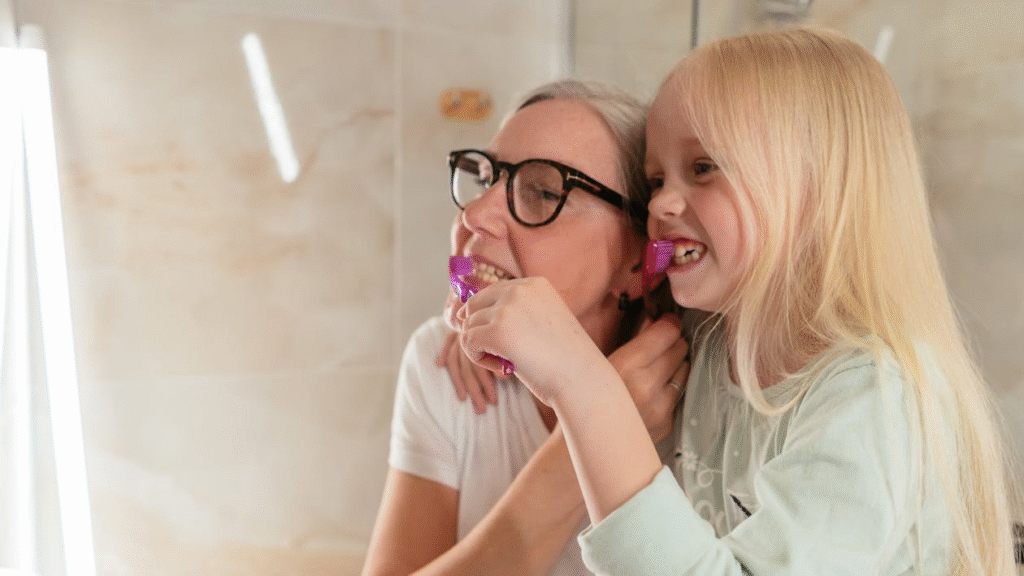
So, when do children lose their baby teeth? The process usually happens between the ages of 6 and 12, but the exact timing varies from child to child. What matters most is maintaining good oral hygiene, regular dental visits at My Teeth and Me, and providing reassurance to your child along the way.
Every wiggly tooth is a reminder that your child is growing and entering a new stage of life. With the right guidance and support, the transition from baby teeth to permanent teeth can be a smooth and positive experience.
Most children lose their first tooth around 6 years old.
The lower front teeth, or central incisors, usually fall out first.
Not necessarily. Every child develops differently. If there’s concern, a dentist can check with an x-ray to confirm permanent teeth are on the way.
Yes, in rare cases, a baby tooth may stay if there’s no permanent tooth underneath. A dentist should monitor this situation.