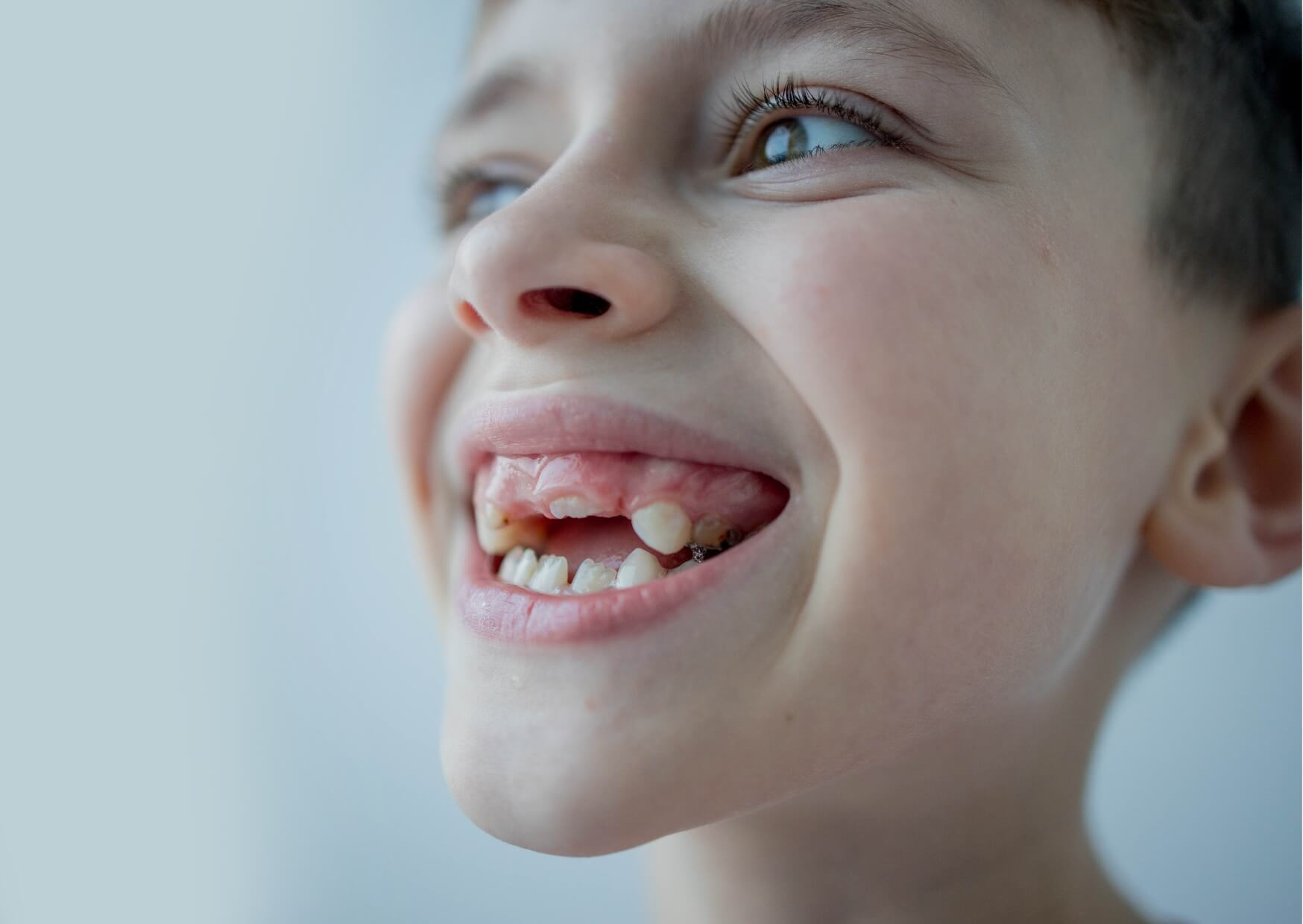
For many families, a loose baby tooth feels exciting and a little worrying at the same time. Most kids lose their first tooth around age 6, but anywhere from about ages 4 to 7 can still be normal depending on growth, genetics, and when the baby teeth first came in. You can also read more about the average age of the first tooth. The first teeth to loosen are usually the lower front baby teeth in the center. After that, the upper front teeth often follow. Some children lose teeth in a very predictable pattern. Others follow a less tidy timeline, and that can still be normal. At My Teeth & Me in New York, NY, our dental check-ups can help evaluate loose or early-losing baby teeth and provide reassurance when the timing feels uncertain. Baby teeth, also called primary teeth, loosen when the permanent teeth underneath begin moving upward. As this happens, the roots of the baby teeth gradually dissolve through a normal process called root resorption. Children who got baby teeth early may also lose them early. Children whose teeth came in later may lose them later too. Jaw growth also plays a role. Permanent teeth need enough space and the right path to come in, so if things look crowded or off track, an orthodontic evaluation may help. It is common for a first loose tooth to show up in kindergarten or first grade. Mild tenderness, a little gum irritation, and a tooth that stays loose for days or even weeks can all be part of a normal transition. Early tooth loss may need a closer look if a child loses a baby tooth well before age 4 without a clear reason. Delayed loss may also deserve evaluation if no baby teeth are loose by around age 7 or 8, especially if the front permanent teeth seem slow to appear. Not every variation means there is a problem. Still, very early or delayed tooth loss can sometimes be linked to injury, missing permanent teeth, crowding, infection, or, less commonly, a medical condition that affects tooth development or bone support. If decay or damage is a concern, restorative care and sealants can help protect teeth. For more about causes and next steps after early loss, read about losing teeth prematurely. If the timing seems off, the dentist usually starts by checking the eruption pattern, or the order and stage of tooth development. The exam also looks at the gums, how loose the baby tooth is, spacing, bite, and any signs of trauma or decay. A dental check-up, sometimes including dental X-rays, may be recommended to see whether the permanent tooth is present and how it is positioned. X-rays can help answer whether the adult tooth is coming in, whether it is blocked, or whether the baby tooth root is dissolving as expected. The dentist also checks for signs of infection. Swelling, gum drainage, pain with biting, or a darkened tooth can point to something other than normal tooth shedding. In most cases, a loose baby tooth does not need to be pulled right away. If it is only mildly loose, forcing it out too soon can cause unnecessary pain and bleeding. A tooth that is hanging by a small piece of tissue may come out during normal eating or with gentle movement. If your child is uncomfortable, anxious, or the tooth seems stuck for an unusually long time, it is reasonable to call the dental office for guidance. A dentist may recommend removal if the baby tooth is blocking the permanent tooth, causing pain, or staying in place too long. That decision depends on the exam, not on age alone. Call a dentist sooner if a loose tooth follows a fall or mouth injury, especially if the tooth looks pushed out of position. Traumatic dental injuries can affect both the baby tooth and the developing permanent tooth underneath. You should also call for swelling, bleeding that does not stop, pus, fever, or significant pain. Those signs are not typical for simple tooth loss and may point to infection or injury. Another reason to schedule promptly is when the permanent tooth starts coming in behind or in front of a baby tooth that is not loosening. This is common and often manageable, but it should be checked so the eruption path can be monitored. You can learn more about a tooth growing behind. For a first loose tooth concern, the visit is usually simple and quick. The dentist will ask when the tooth became loose, whether there was any injury, and whether there is pain, swelling, or trouble eating. Often, the exam answers the main question right away: is this normal timing, or does it need follow-up? If X-rays are needed, they help check the permanent tooth and guide the next step. In many cases, the plan is just observation and routine follow-up. If something looks off, the dentist can explain whether it is most likely related to spacing, eruption timing, trauma, or decay. A calm approach helps. Many children are excited by a loose tooth one day and bothered by it the next, so it helps to treat it as a normal part of growing up rather than something that needs to be rushed. Keep up regular brushing and flossing, even if the area is a little sensitive. Softer foods may feel better for a day or two if the tooth is very loose. Ask your dentist about sealants and other preventive options if your child is prone to cavities. If the timing seems unusual or the pattern does not match what you expected, a dental check is the safest way to sort out what is normal for your child. That visit can provide reassurance when everything is on track. It can also catch less common problems before they become bigger issues. If you're concerned, My Teeth & Me in New York, NY offers dental check-ups to assess early or delayed tooth loss and serves families in Yorkville and Lenox Hill; call (646) 403-3430 to schedule. Most kids lose their first baby tooth around age 6. A normal range can extend from about ages 4 to 7. The lower front baby teeth in the center are usually the first to loosen and fall out. The upper front teeth often follow soon after. It may still be normal, especially if the baby teeth came in later than average. If there is no looseness by around age 7 or 8, a dentist can check whether the permanent teeth are developing and erupting normally. Not always, but it is worth paying attention to the reason. If the tooth was lost after trauma or seems to have come out unusually early without a clear cause, a dental exam is a good idea. This can happen, especially with the lower front teeth. It often improves as the baby tooth loosens more, but a dentist should evaluate it to make sure the eruption pattern is on track.What Usually Determines the Timing
What Is Normal and What Is Not
What a Dentist Looks For
If a Tooth Is Loose, Should It Be Pulled?
When to Call Sooner
What to Expect at the Visit

How Parents Can Support the Process
FAQs
What age do most kids lose their first tooth?
Which tooth usually falls out first?
Is it normal if my child is 7 and has not lost any teeth yet?
Should I worry if my child loses a tooth at age 4?
What if the adult tooth is coming in behind the baby tooth?
Related Articles